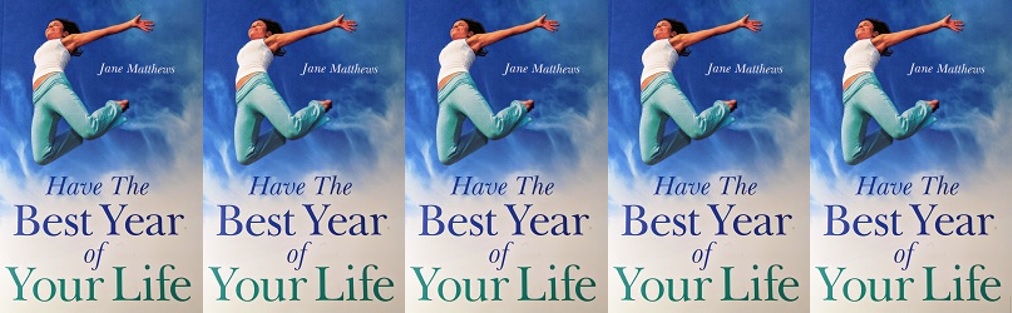

It’s about time I shared these weekly guided meditations from the wonderful Juliet Vorster. She has a great voice and a great message.
Check out the link to her Facebook page above, where every Monday, at 7.23 am prompt, she leads a live meditation.
It’s about time I shared these weekly guided meditations from the wonderful Juliet Vorster. She has a great voice and a great message.
Check out the link to her Facebook page above, where every Monday, at 7.23 am prompt, she leads a live meditation.

This morning I’m reminded of how change sometimes works at a personal level.
We allow things to get so bad, make so many poor choices and somehow manoeuvre ourselves into a position where to go on as we were becomes, finally impossible.
At this point the pain of changing our lives is at last less than the pain of staying where we are. “The pain of staying the same has to become greater than the pain of change.”
I wonder, on a global scale, if we are seeing this happen. If we are manoeuvring ourselves into that same place of pain in order to build the impetus, the connections, and the courage, to stand up for a better world.
Just as, through the hurly burly of life, we are all capable of growing into better versions of ourselves, so our divided, fearful, unjust (but still beautiful) world, can also be transformed.
Today, choose compassion rather than fear, above all in your own heart and thoughts.


In the last 24 hours I’ve shared hugs with two complete strangers.
Mum was very poorly, rushed to hospital in the early hours of Tuesday morning with sepsis. Shushie and I kept vigil over her embattled body, lapsing in and out of consciousness.
The only other activity in the small bay was in the far corner where another woman was recovering from serious sickness. She was surrounded at all times by daughters, sons, brothers, sisters and neighbours bearing aluminium dishes containing Pakistani food for the patient – an entire extended family.
Yesterday the Muslim chaplain came to see her and, after saying prayers, spoke to me.
Amazing how a sympathetic word unlocks tears: I cried a little and shared with him my fears for mum.
The visitors in the corner saw my tears and, after the chaplain left, came over themselves. They brought a beaker of tea, asked after mum and said they would pray for her. The oldest son insisted I was to ask for their help if there was anything at all I needed; then he gave me a bear hug. The walls of their extended family had been redrawn to offer me a place of care and comfort.
More days of hospital visiting lie ahead so at 8.30 this morning I was pulling ready meals off the shelves in Marks and Spencer, anticipating I’d have little time or energy at the end of each day.
Behind me in the queue a middle aged man with Mediterranean features held only a single bouquet of pink carnations. I invited him to go ahead of me.
“Thank you.” His cheeks flushed, then he mumbled “these are for my mum. She died three weeks ago. Carnations were something special between us.”
“I’m so sorry. I’m sure you were special to her as well.”
He started to cry and I put my hand on his shoulder while he apologised and fumbled with a hanky and told me how his mum had always come to M&S. He’d driven up from Surrey that morning, he said, and was in no hurry really because his dad had dementia and wouldn’t open the door to him until after 10.
So I went ahead after all but after paying I turned back and gave him a hug while the cashier studied her nail polish. He held tightly onto me for a moment, then thanked me as we wished each other well.
These are the moments that matter in a world where politicians want to build walls and the media’s success depends on reinforcing what divides us.
More than ever it seems to me that our best chance of healing our world lies in ordinary people choosing to see what we have in common: reaching out to each other over these small but important shared experiences – across boundaries of race, culture, and even convention (because let’s face it, how many total strangers have you hugged in the supermarket queue?)
Fear, distress, hope, faith, love, empathy, confusion, vulnerability: in opening to our human feelings and choosing to see the same in others, we are not so much stepping over the boundaries as dismantling them brick by brick. When enough people do that there will no longer be anything there.
This one hit the spot for me today – what is your personal Groundhog Day? Thanks Nutty Acorn for the reminder.


A day after breakfasting with my delightful daughter in the West End and realising a childhood dream of flying on the trapeeze, this short blog on there being only three steps to heaven rang 100% true.
http://www.sunilbali.com/2016/10/stuffocating/
Once a week I take mum to pay her bills in town and once a week my inner traffic warden leaps out as smartly as The Spanish Inquisition in those old Monty Python sketches.
Even before I’ve unpacked the wheelchair I’m scanning other cars to check they have blue badges on display.
Sadly, this isn’t the only time I don a virtual uniform to check up on other people. Dull and foggy days see me flashing drivers without headlights on.
“I can see the other cars on the road perfectly well”, I mimic what I imagine they are thinking. “Right, idiot!” the traffic cop in me responds. “But have you considered we can’t see YOU?”
Byron Katie says there are three kinds of business: our business, God’s business (for which you are welcome to substitute the laws of the Universe), and other people’s business.
Yet it’s only just occurred to me how much time I actually spend minding other people’s business in this way.
THE TRUTH AND NOTHING BUT THE TRUTH?
But hang on… surely sticking my nose into other people’s business is justified? Disabled parking exists to make life a tad easier for people like mum, and unsafe driving habits put us all at risk.
I get that, but I’m not willing to let myself off the hook for two reasons.
Firstly, even as I am setting myself up as judge and jury over bad driving habits, I know it’s rare that we ever truly know what’s going on.
That woman I’m angry with for nabbing the last disabled space without a blue badge may be dashing into town on an urgent errand for a sick neighbour. Or her life may be an impossible juggling act of responsibilities and stress, or her husband left her last week and she’s not thinking straight – and in that sense she may be suffering far more than mum – or me if I have to push mum an extra 100 metres.
Or she may have the kind of dis-ease that isn’t immediately obvious – perhaps she’s in the middle of chemo for instance – and has forgotten her blue budge, as I do sometimes.
MINDING MY BUSINESS
And secondly, judgement doesn’t feel good.
There’s no doubt that driving a dark car on a dark road without lights is foolish and dangerous. But so is allowing my thoughts to chunter away, working themselves up from irritation to anger, assuming transgressors are being arrogant rather than forgetful.
My hawk-like focus on finding and furiously flashing every lightless-car is bound to make me a less attentive driver. Just as choosing thoughts of anger, blame, judgement make me a less peaceful one.
If what we give out is what we get back, sitting in judgement on others is only reinforcing those old thought patterns in which I judge myself (for not being good enough or kind enough or hardworking enough or any other type of enough).
Becoming aware how much judging is going on when I’m minding other people’s business has been like lights going on in my own mind. As I let go of judging others, choosing instead thoughts of compassion and understanding, I can do the same for myself.
That doesn’t mean that if the last disabled parking spot is occupied by someone who’s clearly only pulled in to use the cash machine I won’t smile and politely ask if they’d mind pulling back a little as there’s nowhere else for us to park. Nor that on a dusky autumn day I won’t do all of us a friendly favour by flashing my lights at a car I almost missed in the gloom. But that I will try to do so without judgement.
My choices. My business.
As you go through your day just gently notice any places where you are judging.
………
Here’s a little treat now you’ve got to the end of this post: no-one expects the Spanish Inquisition https://youtu.be/1N6OOWtCYQA


This year’s far from over but I already know one of its Red Letter Days will be doing the Great North Run with my sister.
Miles behind where Mo Farah was breaking the finish line we ran alongside Star Troopers, Supermen, and firefighters sweating in full uniform. It was a day of colourful celebration, personal achievements and incredible fundraising. It also reminded me of an important lesson: a smile really is the shortest distance between two people.
By mile eight I was convinced someone had replaced my legs with tree trunks. They didn’t bend and they weighed a ton. All around, clenched jaws and clenched faces suggested we charity runners had not only hit the pain barrier but would spend the final five miles shoving against it in order to move forward at all.
I’m sure I grimaced with the best of them – but not as much or as often as I smiled. And it was that that made the difference.
You see the streets were lined with thousands of people, but apart from pointing out the occasional Elsa or Mutant Turtle, there were too many faces and stories for the crowds to pick out individuals.
Our smiles became an invitation to connect for a moment, and that was all it took for the spectators to see us and call out our names. “Go Jane. Well done Shirley. You’re doing great girls.”
Their support was like rocket fuel, just as it can be on any day of the week when we are busy, preoccupied, exhausted, down, depleted, on the treadmill or whatever. And then a moment of connection – a smile, a word, someone seeing us or hearing us – changes everything.
A long chain of those moments got us to the finish line and therefore to a fundraising total of almost £1,000 for the Stroke Association who will spend it making other lives better.
Truly, you never know how far a smile can travel.
Thought for the day from Steve Pressfield’s The War of Art:
“Are you a born writer? Were you put on earth to be a painter, a scientist, an apostle of peace? In the end the question can only be answered by action.
Do it or don’t do it.
It may help to think of it this way. If you were meant to cure cancer or write a symphony or crack cold fusion and you don’t do it, you not only hurt yourself, even destroy yourself, you hurt your children. You hurt me. You hurt the planet.
You shame the angels who watch over you and you spite the Almighty, who created you and only you with your unique gifts, for the sole purpose of nudging the human race one millimeter farther along its path back to God.
Creative work is not a selfish act or a bid for attention on the part of the actor. It’s a gift to the world and every being in it. Don’t cheat us of your contribution. Give us what you’ve got.”
― Steven Pressfield, The War of Art: Break Through the Blocks & Win Your Inner Creative Battles

